7 Signs Your Water Heater Is About to Fail
Most water heaters fail between years 8-12. These warning signs give you time to replace before a catastrophic leak.

May 9, 2026
Safety Disclaimer
Water heater maintenance involves working with pressurized systems, scalding hot water, and potentially hazardous electrical or gas connections. Always shut off power (electric heaters) or gas supply (gas heaters) and allow water to cool to a safe temperature before beginning any maintenance. Wear appropriate safety equipment including gloves and eye protection. If you're uncomfortable with any step, contact a licensed plumber.
Unique angle here: repairable-part vs replace-the-tank split before you order a heater. Age alone is not a death sentence, and rusty water is not always a dead shell.
Desk note: The 8–12 year tank window is a commonly published residential range (manufacturer warranties and trade write-ups), not a lab wear curve from this desk. Some tanks die earlier in hard water; some last longer with an inspected anode. Cost figures below are research ranges from typical listings and service write-ups, not quotes.
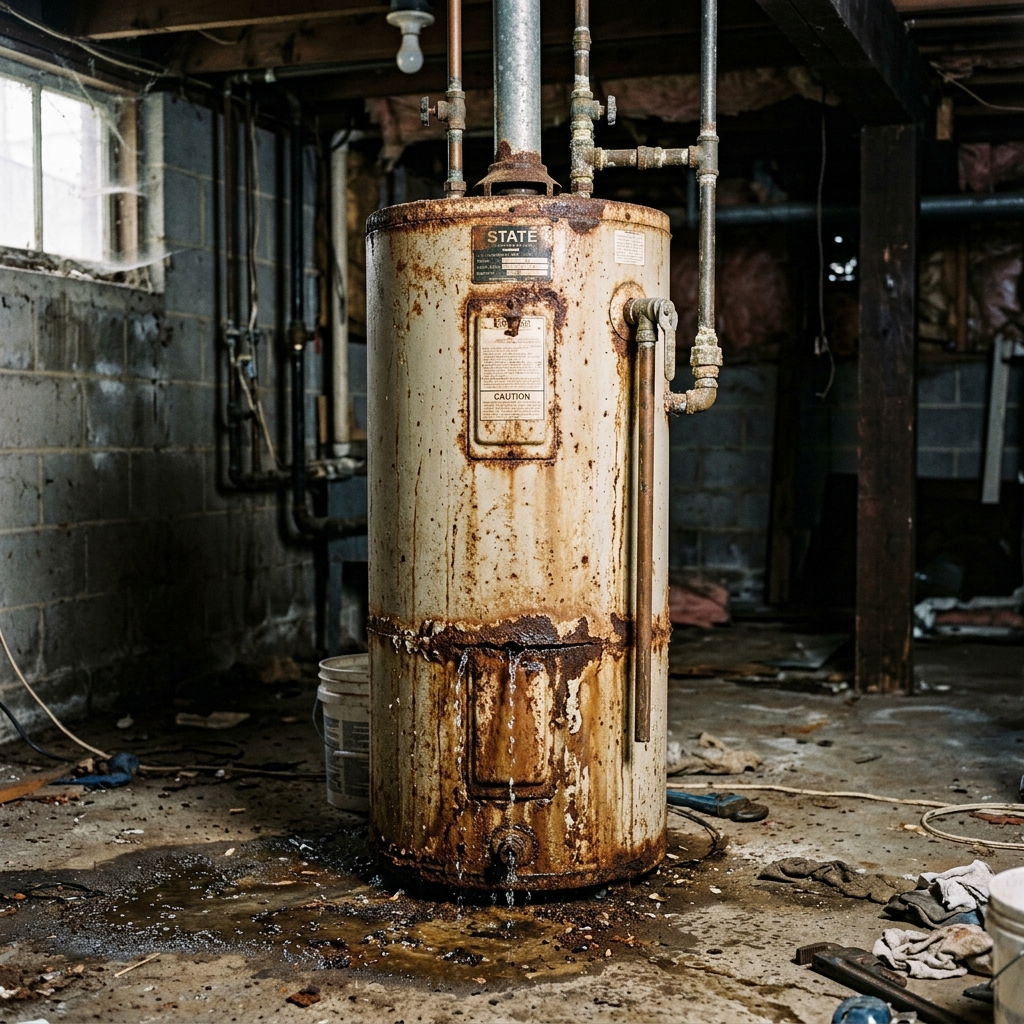
A leaking steel shell is a replacement. A dripping drain valve, a tired element, or a spent anode is often a parts job. The mistake is buying a 50-gallon tank because the water looked brown on a Saturday.
Before You Shop a Replacement Heater
- Glass test. Hot brown, cold clear points at the tank or the hot piping. Both sides brown points at the well or the main. Steps are in why hot water is brown or rusty.
- Look at the floor. Water from the steel jacket or under the foam is a failed tank. Water from a fitting, the drain valve, or the T&P discharge pipe is a different page: water heater leaking from the bottom.
- Read the rating plate. Serial numbers usually encode year and week. “It feels old” is not a date.
- Decide whether you still have a drain path. If you cannot open the drain valve, you cannot flush or inspect. That is a clog or a valve job, not proof the tank is finished — water heater not draining.
- Then price parts vs a heater. An element, a T&P, a drain valve, or an anode is a hardware-store ticket. A leaking shell is not.
If the tank is still in service and you want a warning on the floor, a pan sensor is the useful buy — not a whole-house shutoff kit you do not know how to plumb. The Govee WiFi water leak detector three-pack is the hub-plus-puck set already used on this site. One sensor in the pan is enough. Compare options in best water leak detectors.
Listing check (fail-signs leak puck): confirm the listing is a floor or pan water sensor (hub plus probe), not a whole-house automatic shutoff valve kit sold on the same parent page.
More symptom pages sit on the troubleshooting hub.
1. Age Over 10 Years
Manufacturer literature and trade ranges still put many glass-lined tanks in an 8–12 year service window. That is a planning range, not a fail-by date. A 9-year tank with a healthy anode and a clear flush can be kept. A 6-year tank with a rusted shell is done.
Check the serial number on the manufacturer label. Most encode the manufacture date in the first four characters. Warranties are on the rating plate and the PDF for that model, not on a blog average.
If you are replacing on purpose (remodel, fuel change, heat pump), size the new unit with FHR and fixture math instead of matching the old stencil by habit.
2. Rust-Colored Hot Water
Rusty water from only the hot taps (not cold) means iron is coming from the heater or the hot piping. The usual stack is sediment, a consumed anode rod, or the lining shedding steel.
Repairable: flush until the drain runs clear; inspect and replace a spent rod if the shell is dry. Replace the tank: rust flakes return after a real flush, the rod is gone, and water is at the base of the steel.
Work through why hot water is brown or rusty before you assume the tank is finished. Sediment and a spent anode can look the same at the tap. Flushing signs that are not failure signs live in 5 signs your water heater needs flushing.
Hard-water houses hit this earlier. See how hard water destroys a water heater.
3. Rumbling, Popping, or Banging Noises
Sediment at the bottom of the tank hardens. Water flashing to steam under that layer pops. That is a maintenance sound first.
Repairable: a real flush, sometimes a back-flush if the drain only dribbles. Replace the tank: noise plus a leaking shell, or a tank that will not drain because the bottom is a mineral concrete.
Flushing how-to is the how to flush hub. Noise that is not sediment (expansion, a bad fan on a power-vent) is water heater noise troubleshooting. Lifespan context is how long do water heaters last.
4. Water Around the Base
Any water pooling around the base is urgent. It is not automatically a dead tank.
Repairable: drain-valve drip, T&P discharge, inlet/outlet sweat, a condensate line on a power-vent or heat pump. Replace the tank: water weeping from the steel cylinder or from under the insulation jacket.
A leaking tank can empty 40–80 gallons onto a finished floor. That range is tank volume, not a flood statistic. Use water heater leaking from the bottom to tell a failed tank from a dripping drain valve or T&P pipe.
If the drip tracks with every heat cycle and the house has a PRV or backflow preventer, check whether you need an expansion tank before you condemn the T&P.
5. Inconsistent Water Temperature
Wild swings or a tank that cannot hold the setpoint is often a part.
Repairable (electric): upper or lower element, thermostat, high-limit reset. Test before you buy a heater — how to test a water heater element. Repairable (gas): thermocouple, dirty pilot, gas-valve issues — pilot light won’t stay lit. Replace the tank: the heater is old, the shell is wet, and you are stacking a gas valve plus an anode plus a leak.
Confirm the actual tap temperature before you assume the tank is dying. Factory 140°F vs DOE 120°F is what temperature should your water heater be set to.
6. Reduced Hot Water Volume
Running out faster than last year usually means less usable volume (sediment) or less recovery (element, burner, dip tube).
Repairable: flush; replace a broken dip tube; replace a scaled element. Replace the tank: capacity is gone and the drain water stays rusty after a long flush, or the household simply outgrew the FHR. Resize with the sizing guide instead of turning the dial to 150°F.
7. Metallic Taste or Smell
A metallic taste on the hot side, especially with color, means metal is in the water. Rotten-egg smell is often magnesium anode plus sulfate bacteria — a rod chemistry problem, not automatically a dead tank.
Repairable: anode material change, flush, and a dry shell. Replace the tank: metallic taste plus persistent rust flakes plus age or a wet jacket.
Do not drink from a tank you already think is shedding steel. Identify the source first.
Related Guides
- Why Is My Hot Water Brown or Rusty?
- Water Heater Leaking from Bottom
- How Long Do Water Heaters Last?
- 5 Signs Your Water Heater Needs Flushing
- How Hard Water Destroys Your Water Heater
- What Size Water Heater Do You Need?
- What Temperature Should Your Water Heater Be Set To?
- Do You Need a Water Heater Expansion Tank?
- Water Heater Troubleshooting
- Best Water Leak Detectors
Sources
- Manufacturer warranty and maintenance FAQs (Rheem, A.O. Smith, Bradford White) for typical tank service windows
- U.S. Department of Energy, Water Heating
Editorial Team
Nobody should pay a plumber $300 to turn a drain valve. Our guides are built from manufacturer documentation, plumbing code references, and the documented experience of homeowners and plumbers.