How to Drain a Hot Water Heater (Safe Guide)
Learn how to drain your hot water heater safely with this complete DIY guide. Covers tools, safety precautions, and troubleshooting for tank-style heaters.

April 2, 2026
Safety Disclaimer
Water heater maintenance involves working with pressurized systems, scalding hot water, and potentially hazardous electrical or gas connections. Always shut off power (electric heaters) or gas supply (gas heaters) and allow water to cool to a safe temperature before beginning any maintenance. Wear appropriate safety equipment including gloves and eye protection. If you're uncomfortable with any step, contact a licensed plumber.
Draining your hot water heater is one of those jobs most homeowners put off for years. That’s a mistake. Sediment collects at the bottom of every tank-style water heater, and over time it hardens into a layer of calcium and mineral deposits that reduce heating efficiency, cause strange noises, and shorten the life of your unit.
The good news: draining is straightforward. You can do it yourself in about 30 to 45 minutes with basic tools. This guide walks through every step, from shutting off power to refilling the tank, with safety precautions you should not skip.
Why Draining Your Water Heater Matters
Every gallon of tap water carries dissolved minerals. In areas with hard water, the concentration is higher, but even soft water leaves trace deposits behind. As your water heater cycles through thousands of gallons, those minerals settle to the bottom and form sediment.
Here’s what happens when you ignore it:
- Reduced efficiency. Sediment insulates the bottom of the tank, forcing the burner or heating element to work harder. The U.S. Department of Energy estimates that just half an inch of sediment can increase energy costs by as much as 10%.
- Banging and popping noises. Water trapped beneath the sediment layer boils, creating steam bubbles that pop as they rise through the deposits.
- Shortened tank life. Constant overheating at the tank bottom accelerates corrosion and can cause the steel to weaken.
- Lower hot water volume. As sediment accumulates, it displaces water, reducing the usable capacity of your tank.
Draining once or twice a year prevents all of these issues. In hard water areas, draining every six months is a better target.
What You’ll Need
Gather these before you start. You don’t want to run to the hardware store with a half-drained tank.
| Tool / Supply | Purpose |
|---|---|
| Garden hose (25+ feet recommended) | Routes water to a drain or outside |
| Flat-head screwdriver or drain valve key | Opens the drain valve |
| Adjustable pliers or channel locks | Loosens stuck valves |
| Work gloves (heat-resistant) | Protects against hot water |
| Bucket (5-gallon) | Catches initial flow, checks sediment |
| Safety glasses | Protects eyes from splashing |
| Towels or rags | Cleans up minor spills |
Most of these tools are already in the average garage. The only thing worth buying ahead of time is a quality garden hose rated for hot water, since cheap vinyl hoses can soften and kink under high temperatures.
Safety Precautions
Hot water heaters store water at 120 to 140 degrees Fahrenheit. Burns are the most common injury during this job, and they happen fast.
Before you start:
- Never skip the power shutoff. For electric heaters, flip the dedicated breaker at your electrical panel. For gas units, turn the gas control valve to “Off” or “Pilot.”
- Let the water cool. Ideally, wait two to three hours after shutting off the heat source. Running a hot faucet for 10 to 15 minutes also helps bring down the temperature faster.
- Wear gloves and eye protection. Even water at 110 degrees can scald with prolonged contact.
- Keep children and pets away. The hose discharge area will have hot water flowing through it.
- Check your owner’s manual. Some manufacturers have specific instructions or warnings for their drain valves.
Warning: Never turn on an electric water heater with an empty or partially filled tank. Running the heating elements dry will burn them out within minutes, and that’s a $150+ repair. Electric tanks have extra breaker and element steps; use how to drain an electric hot water heater if that is the unit in front of you.
Step-by-Step: How to Drain Your Hot Water Heater
Step 1: Turn Off the Power Source
- Electric: Locate your electrical panel and switch off the breaker labeled “Water Heater” or “WH.” Verify it’s off by checking that the heater’s indicator light (if present) has gone dark.
- Gas: Turn the gas control dial on the front of the heater to “Off” or “Pilot.” If you’re not sure which valve to use, refer to the label on the unit.
Step 2: Shut Off the Cold Water Supply
Find the cold water inlet valve at the top of the heater. It’s usually a gate valve (round handle) or ball valve (lever handle) on the pipe feeding into the tank. Turn it fully clockwise to stop incoming water.
If you can’t find a dedicated shutoff, you can turn off the main water supply to your house, though that cuts water to everything.
Step 3: Wait for the Water to Cool
This step is optional but strongly recommended. Letting the water sit for two to three hours after shutting off the heat source brings the temperature down to a safer level.
If you need to speed things up, open a hot water faucet somewhere in the house and let it run until the water coming out feels lukewarm.
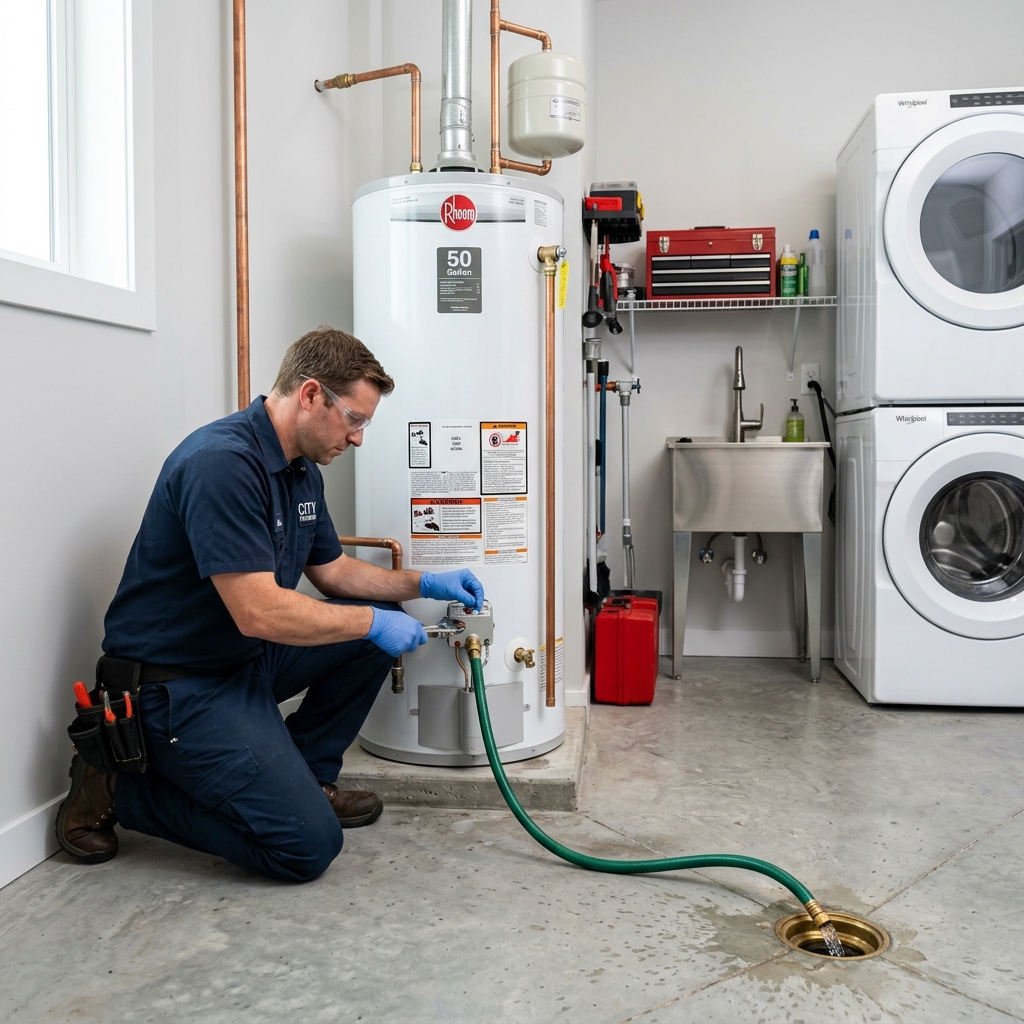
Step 4: Connect the Garden Hose
Locate the drain valve near the bottom of the water heater. It looks like an outdoor hose bib, usually made of brass or plastic.
Thread your garden hose onto the valve and tighten it by hand. Run the other end to a floor drain, a utility sink, a driveway, or your yard. Keep in mind the water may contain sediment that can stain light-colored surfaces.
Tip: If you’re draining onto a driveway or patio, let the water cool first. Hot, sediment-heavy water can crack concrete in rare cases and will kill grass.
Step 5: Open a Hot Water Faucet
Open the hot side of a faucet somewhere in the house, preferably on an upper floor. This breaks the vacuum inside the tank and lets air in, allowing water to flow freely from the drain valve.
Alternatively, you can lift the lever on the temperature and pressure (T&P) relief valve on the side of the tank to achieve the same effect.
Step 6: Open the Drain Valve
Turn the drain valve counterclockwise to open it. Water should begin flowing through the hose.
The first few gallons will likely be cloudy or discolored. That’s normal and a sign that sediment is being removed. Let the tank drain completely, which typically takes 20 to 40 minutes depending on tank size and how much sediment is present.
If the flow is weak or stops: Sediment may be clogging the valve. Close the valve, turn the cold water supply back on for 10 to 15 seconds to stir up the sediment, then close the cold supply and reopen the drain. Repeat until the blockage clears.
Step 7: Flush the Remaining Sediment
Once the tank is empty, briefly turn the cold water supply on while the drain valve is still open. This sends a blast of fresh water through the tank, flushing out any sediment sitting on the bottom.
Let it run for 30 seconds to a minute, then shut the cold water off again. Repeat this two or three times until the water coming from the hose runs clear.
Step 8: Close the Drain Valve and Disconnect
Once the water runs clear:
- Close the drain valve completely. Make sure it’s tight so there’s no slow drip.
- Remove the garden hose.
- Wipe down the valve area with a rag to check for any seepage.
Step 9: Refill the Tank
- Make sure the drain valve is fully closed.
- Close the T&P relief valve if you opened it.
- Turn the cold water supply back on.
- Open a hot water faucet in the house and leave it running.
- Wait until you get a steady stream of water from the faucet with no sputtering or air. This means the tank is full and air has been purged.
- Close the hot water faucet.
Step 10: Restore Power
- Electric: Flip the breaker back on. Wait 30 minutes, then check for hot water at a faucet.
- Gas: Turn the gas control valve to your desired temperature setting. If you turned the pilot off, relight it following the instructions on the unit’s label.
Step 11: Check for Leaks
Inspect the drain valve and all connections for drips. A small drip from the drain valve is common on older units. Try opening and closing the valve a couple of times to let any trapped sediment clear. If it keeps dripping, you may need to replace the valve, which is a separate job.
Troubleshooting Common Issues
| Problem | Likely Cause | Fix |
|---|---|---|
| No water flows from drain | Clogged valve | Close valve, flush cold water briefly, reopen |
| Water is rusty red | Tank corrosion or old anode rod | Drain fully, inspect anode rod. See brown or rusty hot water. |
| Drain valve won’t close tight | Sediment in valve seat | Open/close several times, or replace valve |
| Hose kinks under pressure | Hose too thin or not rated for hot water | Use a reinforced garden hose |
| Water heater makes noise after refilling | Air trapped in tank | Open hot faucets until air clears |
How Often Should You Drain Your Water Heater?
For most households, draining once a year is sufficient. If you live in an area with hard water (you’ll know because you get white buildup on faucets and showerheads), draining every six months is a better schedule.
Some newer water heaters have self-cleaning features that reduce sediment buildup, but they don’t eliminate the need for periodic draining. Check your owner’s manual for the manufacturer’s recommendation.
When to Call a Professional
Draining a water heater is a manageable DIY job, but there are situations where calling a licensed plumber makes more sense:
- The drain valve is rusted shut and won’t budge.
- You notice signs of a tank leak (rust stains, moisture at the base).
- The water heater is more than 10 years old and has never been drained.
- You smell gas near a gas water heater at any point during the process.
A professional can also inspect the anode rod, T&P valve, and other components while servicing the unit, which gives you a more complete maintenance picture.
Frequently Asked Questions
How long does it take to drain a 40-gallon water heater?
Plan for 20 to 40 minutes of active draining time, plus setup and cooldown. The total job, including the flush cycles, usually takes about an hour.
Can I drain my water heater into my yard?
Yes, as long as the water has cooled to a safe temperature. Avoid draining directly onto plants or grass, since hot water and sediment can damage them.
What happens if I never drain my water heater?
Sediment accumulates, reducing efficiency and increasing energy costs. Over time, the sediment hardens and can permanently damage the tank lining, leading to leaks and premature failure.
Do tankless water heaters need draining?
Tankless units don’t have a storage tank with sediment accumulation, but they do need periodic descaling with vinegar to remove mineral buildup from the heat exchanger. The process is different from draining a tank-style heater.
Is it safe to drain a hot water heater by myself?
Yes, for most homeowners with basic tool skills. The key safety steps are shutting off the power, letting the water cool, and wearing protective gloves. If you’re uncomfortable with any step, call a plumber.
Related Guides
- How to Flush a Water Heater, Complete flushing guide with the vinegar method
- Signs Your Water Heater Needs Flushing, Know when it’s time
- Anode Rod Replacement Guide, Protect your tank from corrosion
- Gas vs. Electric Maintenance Differences, Fuel-specific care tips
- How to Test a Water Heater Element, Check elements before replacing
- Pilot Light Troubleshooting, Fix a pilot that won’t stay lit
Sources
- Rheem Water Heater Maintenance Guide, Manufacturer draining recommendations
- A.O. Smith Owner’s Manual, Tank maintenance procedures
- U.S. Department of Energy, Water Heating, Energy efficiency and maintenance best practices
Editorial Team
Nobody should pay a plumber $300 to turn a drain valve. Our guides are built from manufacturer documentation, plumbing code references, and the documented experience of homeowners and plumbers.