Electric vs Gas Water Heater: Complete Comparison Guide
Compare electric and gas water heaters on cost, efficiency, lifespan, and safety. Find out which type fits your home.

May 25, 2026
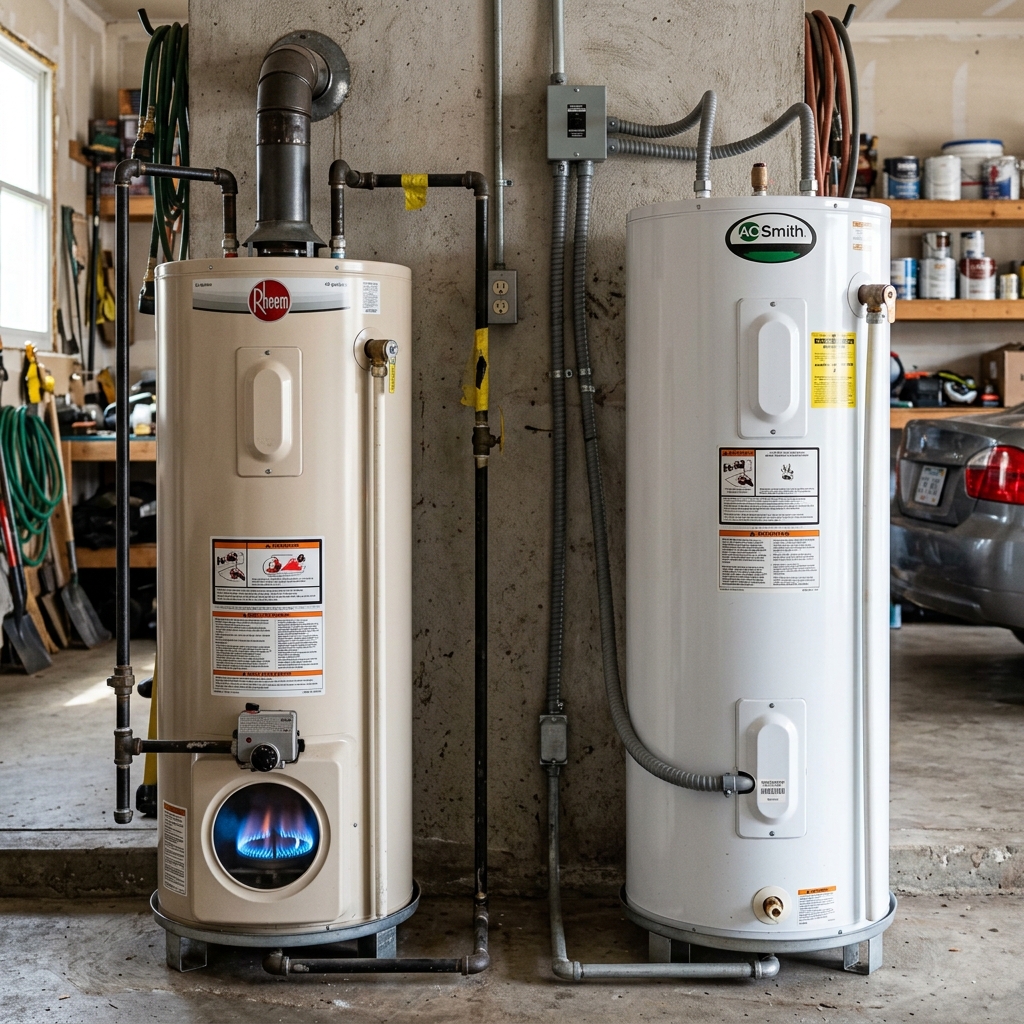
Choosing between an electric and gas water heater is one of those decisions that sounds simple until you start looking at the numbers. Both do the same job, but they get there in very different ways, and the right choice depends on your home’s existing infrastructure, your utility rates, and how much hot water your household actually uses.
This comparison uses manufacturer recovery ratings, DOE operating-cost ranges, and the trade-offs that show up in homeowner and plumber write-ups, not just a spec sheet. Unique angle here: recovery rates, conversion costs, and heat-pump as a third option. The shorter cost table is Electric vs. Gas Water Heaters.
How Each Type Works
Gas Water Heaters
A gas burner sits at the bottom of the tank. When the thermostat calls for heat, the burner ignites and heats the tank from below. Combustion gases rise through a flue pipe in the center of the tank and exit through a vent to the outside. The entire process moves heat into the water quickly because the burner produces a concentrated, high-temperature flame.
Gas units require three things your home may or may not have: a natural gas or propane supply line, a dedicated vent pipe to the exterior, and adequate combustion air around the unit.
Electric Water Heaters
Electric water heaters use one or two metal heating elements immersed directly in the water. The upper element heats the top portion of the tank first, so you get usable hot water quickly. The lower element handles the bulk of the heating. No combustion occurs, so no vent pipe is needed.
Electric units plug into a 240-volt dedicated circuit. That’s it. No gas line, no vent, no combustion air requirements.
Side-by-Side Cost Comparison
Here is what you are looking at financially:
| Factor | Gas | Electric |
|---|---|---|
| Unit cost | $600 - $1,800 | $400 - $1,200 |
| Installation cost | $800 - $1,500 | $300 - $800 |
| Annual operating cost | $250 - $350 | $400 - $550 |
| Recovery rate (50-gal) | 40 - 50 GPH | 20 - 25 GPH |
| Average lifespan | 8 - 12 years | 10 - 15 years |
| Energy efficiency | 60 - 70% (standard) | 90 - 95% |
The Efficiency Paradox
This trips people up. Electric heaters convert 90 to 95 percent of the electricity they consume into heat. Gas heaters only convert 60 to 70 percent of the gas energy into heat, with the rest going up the flue. So electric is far more efficient, right?
Yes, but efficiency and cost are different things. A therm of natural gas costs roughly $1.00 to $1.50 in most regions. Getting the same amount of energy from electricity costs $3.00 to $5.00. Gas loses more energy during conversion, but the fuel itself is so much cheaper that it still wins on monthly bills.
The exception is heat pump water heaters, which we will cover below.
Performance: Recovery Rate and First-Hour Delivery
Recovery rate is how many gallons of hot water the heater can produce per hour starting from a full tank of cold water. This is the spec that matters most for large households.
A 50-gallon gas water heater recovers at roughly 40 to 50 gallons per hour. A 50-gallon electric unit recovers at 20 to 25 gallons per hour. In practical terms, a gas heater can serve back-to-back showers with minimal wait time. An electric heater needs more time between heavy draws.
First-hour delivery (FHD) measures how many gallons of hot water the heater can provide in the first hour of heavy use, starting with a full tank. For a 50-gallon gas unit, FHD is typically 70 to 80 gallons. For a 50-gallon electric unit, expect 55 to 65 gallons.
If your household regularly runs the dishwasher, washing machine, and showers within the same window, gas gives you more margin. If you have a smaller household with spaced-out demand, electric handles it without issue.
Installation Differences
Gas Installation Requirements
- Existing natural gas or propane supply line to the heater location
- B-vent or direct vent pipe to the roof or exterior wall
- Adequate combustion air (most codes require a certain volume of space or fresh air ducts)
- Sediment trap on the gas supply line (code-required)
- Gas shut-off valve within reach of the unit
Gas installation is more complex and more expensive. If you are replacing gas with gas, the existing infrastructure is already in place and costs stay reasonable. Running a new gas line to a location that has never had one can add $500 to $2,000 to the project.
Electric Installation Requirements
- 240-volt, 30-amp dedicated circuit
- Proper circuit breaker in your electrical panel
- No venting needed
Electric installation is straightforward. Most homes built after 1960 have adequate electrical capacity. The heater connects to two wires and a ground. If you are swapping an existing electric unit, a competent homeowner can do it in a couple of hours.
Safety Comparison
This is an area where electric has a clear advantage.
Gas hazards:
- Gas leaks at supply connections or the gas valve
- Carbon monoxide from incomplete combustion or blocked venting
- Backdrafting of combustion gases into the living space
- Open flame near the bottom of the unit (keep flammable materials away)
Electric hazards:
- Shock risk from 240-volt wiring during maintenance
- Dry-firing elements if the tank is not full when power is restored
Gas water heaters are safe when properly installed and maintained, but they have more things that can go wrong. If you have concerns about carbon monoxide, an electric water heater eliminates that risk entirely. For more on staying safe, read our water heater safety guide.
Maintenance Requirements
Both types need annual flushing to remove sediment, and both need their anode rod checked every 3 to 5 years. Beyond that, the maintenance profiles diverge.
Gas-specific maintenance:
- Inspect the vent pipe for disconnections, holes, or corrosion
- Check gas connections with soapy water for leaks
- Clean the burner assembly and pilot light area
- Test the thermocouple function
Electric-specific maintenance:
- Test heating elements with a multimeter
- Inspect wiring connections at the thermostat
- Check for leaks around element gaskets
For a deeper dive into the differences, our gas vs. electric maintenance guide covers the full checklist for each type.
Heat Pump Water Heaters: The Third Option
Heat pump water heaters (also called hybrid water heaters) deserve a mention because they change the electric vs. gas math significantly.
Instead of generating heat directly, a heat pump pulls warmth from the surrounding air and transfers it to the water. This makes them 2 to 3 times more efficient than standard electric models. Annual operating costs drop to $150 to $250, which undercuts gas.
The trade-offs are real:
- Higher upfront cost: $1,200 to $3,500 for the unit
- Space requirements: Need at least 750 cubic feet of warm air around them
- Noise: The compressor fan produces noticeable sound (similar to a dehumidifier)
- Climate sensitivity: Performance drops in spaces below 40 degrees F
If your water heater sits in a conditioned basement or large utility room, a heat pump model can be the cheapest option to operate over its lifetime. Current hybrids are compared in best heat pump water heater 2026.
A quality option worth considering is the Rheem ProTerra Hybrid Electric Water Heater, which combines heat pump efficiency with standard electric backup elements.
When to Choose Gas
Gas is the better choice when:
- Your home already has a gas line to the water heater location
- You have a large household (4+ people) with simultaneous hot water demand
- Natural gas prices in your area are well below the national average
- You want hot water during power outages (gas units with standing pilot lights work without electricity)
- Recovery speed is a priority
When to Choose Electric
Electric is the better choice when:
- No gas line exists at the heater location
- You want simpler installation with lower upfront costs
- Safety is a top concern (no combustion, no carbon monoxide risk)
- You are considering a heat pump model for long-term savings
- Space is limited and you cannot accommodate venting
Making the Switch: What It Costs to Convert
Switching fuel types is possible but adds cost. Here are the common conversion scenarios:
| Conversion | Additional Costs |
|---|---|
| Gas to electric | $300 - $800 for 240V circuit, cap gas line, remove vent |
| Electric to gas | $500 - $2,000 for gas line, $300 - $600 for vent installation |
If you are already replacing a failed unit, a fuel conversion during the swap is the most cost-effective time to do it. Doing it as a standalone project is harder to justify financially.
The Bottom Line
For most homeowners replacing an existing water heater, the simplest answer is usually the right one: replace it with the same fuel type you already have. The infrastructure is in place, installation costs stay low, and you know what to expect.
If you are building new or doing a major renovation, run the numbers for your specific utility rates. Gas wins on operating cost in most markets. Electric wins on safety, simplicity, and upfront cost. Heat pump models win on long-term operating cost if you have the right space for them.
Either way, the heater that lasts longest is the one you maintain regularly. Annual flushing and anode rod checks matter more than which fuel type you pick.
Related Guides
- Gas vs. Electric Maintenance Differences, Fuel-specific care tips
- How Long Do Water Heaters Last?, Lifespan by type
- Water Heater Safety Guide, 7 hazards every homeowner should know
- How to Test a Water Heater Element, Electric element diagnostics
- Annual Water Heater Maintenance Checklist, Complete yearly service list
Sources
- U.S. Department of Energy, Water Heating, Efficiency ratings and operating cost estimates
- Energy Star, Water Heaters, Qualified product specifications
- Consumer Reports, Water Heater Buying Guide, Reliability data and brand comparisons
Editorial Team
Nobody should pay a plumber $300 to turn a drain valve. Our guides are built from manufacturer documentation, plumbing code references, and the documented experience of homeowners and plumbers.